If you’ve ever pulled a name badge off your shirt and found two tiny pin holes left behind, you already understand the appeal of magnetic name tags. They hold a badge securely without ever piercing the fabric, which is why hotels, retailers, clinics, and conference teams have steadily switched to them. This guide explains how the magnetic fastener compares to pins, clips, and adhesive, which materials hold up best, and the simple design rules that make any name badge easy to read across a room.
What are magnetic name tags?
A magnetic name tag is a name badge that fastens with magnets instead of a pin or clip. The front piece carries the name, role, and any logo, while one or more magnets are mounted on the back. A separate magnetic bar goes behind the clothing, and the two pieces snap together through the fabric. Because nothing pierces the garment, magnetic name tags are the go-to choice for staff who wear nicer uniforms, blazers, or knitwear that pin holes would ruin.
The other reason teams like them is consistency. A magnet keeps the badge sitting level and in the same spot every shift, so a row of employees looks uniform rather than crooked. That polished, repeatable look is a big part of why customer-facing businesses favor them.
Magnetic name tags vs pin, clip, and adhesive
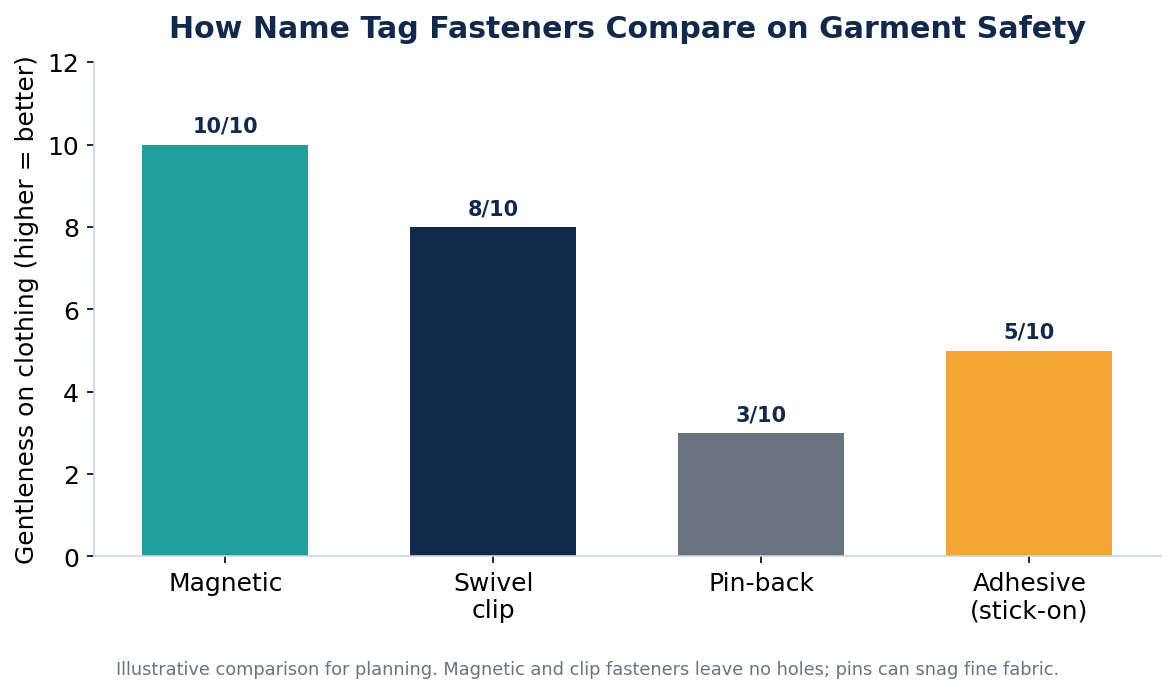
The fastener you pick has a bigger impact on day-to-day experience than almost any other choice. Here is how the four common options compare, with the most fabric-friendly choices toward the top.
| Fastener | Garment safety | Best for | Watch out for |
|---|---|---|---|
| Magnetic | Excellent (no holes) | Blazers, knits, uniforms, daily wear | Not for pacemaker wearers; thick fabric weakens hold. |
| Swivel clip | Good (no holes) | Shirt pockets, lapels, collars | Needs an edge to clip to; can flop forward. |
| Pin-back | Low (leaves holes) | Aprons, lanyards, low-cost runs | Pin holes and snags on fine fabric. |
| Adhesive (stick-on) | N/A (disposable) | Events, visitors, one-time use | Single use; residue on some fabrics. |
For permanent staff badges that get worn every day, magnetic name tags and swivel clips are the two fabric-safe winners, and magnets edge ahead on a clean, level look. Pins still make sense for very low-cost runs or items like aprons, while adhesive labels are best left for one-time event visitors. You can compare these options side by side in our magnetic name tag collection.
Materials: plastic vs metal name badges
After the fastener, material is the choice buyers ask about most. The two mainstream options are plastic and metal, and each suits a different budget and brand feel.
Plastic name badges
Plastic badges are the most affordable and the most flexible on color. They are usually printed in full color or engraved into a two-layer laminate, making them ideal for large staff rosters, bright branding, and frequent reprints when people change roles.
Metal name badges
Metal badges in brushed silver, gold, or black give an upscale, durable look that suits hospitality, real estate, and management roles. They are typically engraved or printed under an epoxy dome, resist scratching, and last for years, which offsets their higher per-unit cost.
Design rules for a name badge people can actually read
A name badge only works if a customer can read it from a few feet away without staring. A few simple rules cover most situations:
- Make the first name biggest. It is the only word most people need. Aim for a bold, sans-serif font around 24–30pt on a standard badge.
- Keep high contrast. Dark text on a light badge (or the reverse) reads far better than tone-on-tone color.
- Limit the lines. First name, then role or last name, then logo. Three elements is plenty.
- Standardize size and placement. A consistent badge worn on the same side every shift looks intentional and professional.
- Leave breathing room. Margins around the text stop the badge looking cramped.
Choose magnetic, clip, or pin, pick plastic or metal, and add names and a logo in minutes with our builder.
Get a QuoteOutfitting a full staff or planning a conference? See our companion guide to custom magnetic name tags in bulk, or browse ready-to-personalize styles in the magnetic name tag collection.
Frequently asked questions
How do magnetic name tags work?
A magnet on the back of the badge pairs with a separate magnetic bar placed behind the clothing. The two clamp the fabric between them, holding the badge securely without any pin. To remove it, you simply slide or pull the two pieces apart.
Are magnetic name tags better than pins?
For most everyday staff badges, yes. Magnetic name tags leave no holes, sit flat and level, and are faster to put on, which makes them gentler on uniforms and more professional looking. Pins remain a low-cost option but can snag fine fabric and leave marks.
Do magnetic name tags damage clothing?
No. Because nothing pierces the fabric, magnetic name tags are safe for blazers, knits, and delicate materials that pins would harm. On very thick coats the magnet may hold less firmly, so a slightly stronger magnet is recommended for heavy garments.
Are magnetic name badges safe to wear?
They are safe for the vast majority of people. The one important exception is anyone with a pacemaker or similar implanted medical device, who should avoid strong magnets and choose a clip or pin instead.
Magnet strength and material options vary by supplier and badge size. Anyone with a medical implant should consult their provider before wearing magnetic accessories. Last reviewed: 2026.