Metal Name Tags: Finishes, Engraving & Durability
First impressions are decided in seconds, and few pieces of uniform hardware work harder than the badge on a lapel. Metal name tags project a level of permanence and polish that plastic simply cannot match — which is why banks, hotels, medical practices, and law firms keep coming back to them decade after decade. But “metal” covers a lot of ground: brushed aluminum, polished brass, stainless steel, and gold- or silver-toned alloys all look, weigh, wear, and cost differently. This guide breaks down the finishes, the marking methods (engraving versus printing), realistic durability expectations, and how to spec metal name tags for a team so they still look sharp three years from now.
The Metal Options, Compared
Brushed aluminum
The workhorse of the category. Brushed aluminum name tags are light (usually under an ounce), corrosion-resistant, and take both engraving and full-color printing beautifully. The brushed grain hides fingerprints and minor scratches, which keeps tags presentable far longer than polished surfaces. For most teams, brushed silver or brushed gold aluminum is the best value in metal.
Brass
Classic hotel-lobby material with real heft. Polished brass reads traditional and upscale — think concierge desks and country clubs. It requires a protective lacquer coat to prevent tarnish, and it weighs roughly twice what aluminum does, which matters if staff wear tags on lightweight blouses.
Stainless steel
The durability champion. Stainless shrugs off daily abuse, resists corrosion without coatings, and suits industrial-adjacent brands. It costs more to engrave (harder material, slower machining) and offers fewer finish options, but a stainless tag can genuinely outlast the employee’s tenure.
Gold vs silver finish
Finish choice is a branding decision, not a durability one. Gold-toned tags pair naturally with warm brand palettes, wood interiors, and traditional service brands; silver reads modern and clinical, and pairs well with blue and grey uniforms. Many programs run both: gold for guest-facing or senior roles, silver for support staff — a quiet hierarchy cue guests never consciously notice but always register.
| Material | Look & Feel | Weight | Corrosion Resistance | Typical Price (Qty 50) |
|---|---|---|---|---|
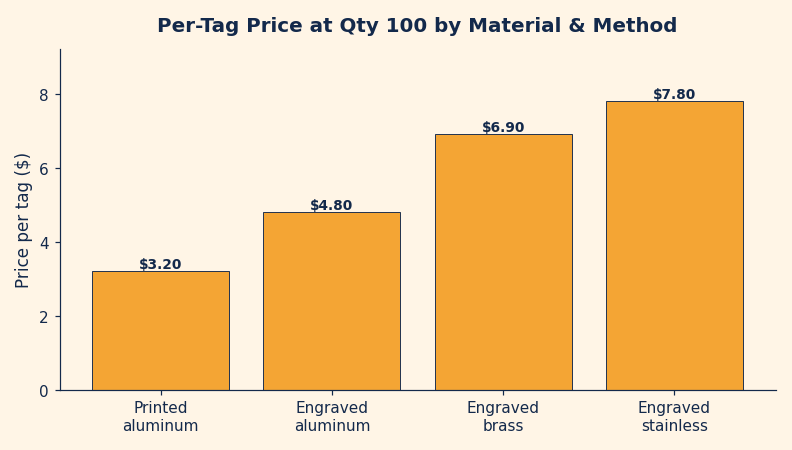
| Brushed aluminum | Modern, understated grain | Very light | Excellent (anodized) | $6–$9 each |
| Polished brass | Traditional, warm, heavy | Heavy | Good (lacquered) | $9–$14 each |
| Stainless steel | Industrial, cool tone | Moderate–heavy | Outstanding | $10–$16 each |
| Gold/silver-toned alloy | Upscale, jewelry-like | Light–moderate | Good (plated) | $7–$12 each |
Engraved Name Tags vs Printed: How the Mark Is Made
The marking method determines how the tag ages, and it is where buyers most often overspend or underspend.
Laser engraving
A laser vaporizes the surface layer to expose a contrasting core or create a dark mark. Engraved name tags are effectively permanent: the text cannot rub, flake, or fade, because it is in the metal rather than on it. Engraving excels for names and titles on anodized aluminum (crisp white or metal-tone text) and for brass and stainless where classic engraved lettering suits the brand. The limitation is color — engraving gives you one contrast tone, not your logo’s full palette.
UV and sublimation printing
Full-color printing lays your exact brand colors and gradients onto the metal face, usually sealed under a clear coat. Modern UV prints hold up well for years of normal wear, but they remain a surface layer — aggressive cleaning chemicals and pocket abrasion will eventually win. The best-of-both spec many teams choose: printed color logo plus engraved name, so the part that changes per person is the part that never wears off.
Reusable inserts
If turnover is high, consider metal frames with printable inserts. You keep the metal presence while swapping names in-house for pennies. The trade-off is a visible insert window and slightly less premium feel.
Durability in the Real World
Lab specs matter less than laundry days and key rings. Here is what actually kills name tags, and how metal handles each threat:
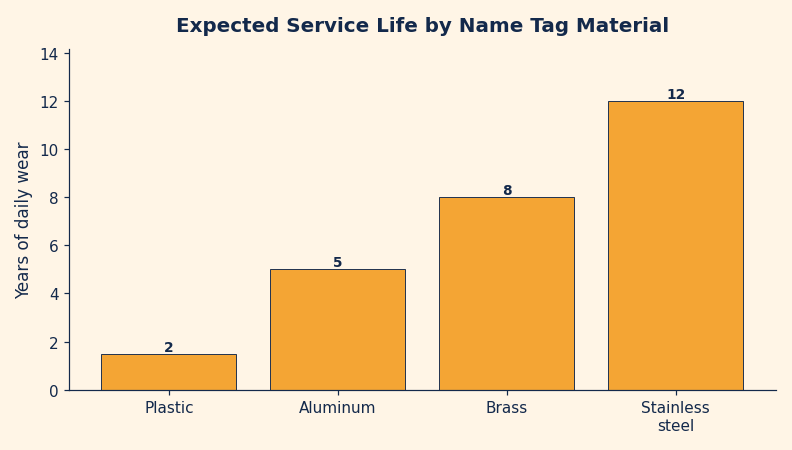
- Daily handling and drops: plastic chips at corners; aluminum dents slightly but stays legible; stainless is essentially indifferent.
- Sunlight: UV fades printed plastic badly within a year outdoors. Engraved metal is immune; sealed UV prints on metal fade slowly.
- Cleaning chemicals: alcohol wipes dull cheap prints quickly. Anodized and engraved surfaces tolerate sanitizer cycles — a decisive advantage since sanitizing badges became routine.
- The washing machine: the number one badge killer. A lacquered brass tag through a hot wash needs replacing; anodized aluminum usually survives. No badge enjoys the dryer.
- Fastener fatigue: the tag often outlives its fastener. Magnetic backers eliminate pin holes in garments and are the default we recommend; just specify a strong two- or three-magnet bar for heavier brass tags so they sit flat.
Speccing an Order for Your Team
A simple decision path that works for most organizations:
- Pick the material by brand feel and environment: aluminum for most offices and clinics, brass for traditional hospitality, stainless for industrial or outdoor roles.
- Pick the finish by palette: gold with warm brands, silver with cool ones — or split by role tier.
- Pick the marking by turnover: engraved for stable teams, printed-logo-plus-engraved-name for color-critical brands, insert frames for high-churn roles.
- Standardize size and layout: 3 x 1 inch suits name-only; 3 x 1.5 inches fits name, title, and logo comfortably. Keep one layout template so reorders match.
- Order 10% overage: new hires arrive between orders, and a drawer of blanks (for insert systems) or a fast reorder template (for engraved) keeps everyone badged.
If you are still weighing fastener types, our earlier guide comparing magnetic and pin backings on the blog covers garment care and safety considerations, and you can learn more about how we produce and ship tags on our about page. Teams in medical and hospitality settings have a few extra requirements worth planning for — see our companion guide to name badges for healthcare and hospitality teams for role titles, readability, and compliance details.
The Bottom Line
Metal name tags cost two to three times what plastic does upfront and routinely last four times as long while representing your brand better every single shift. Choose brushed aluminum unless your brand demands brass warmth or stainless toughness, engrave what must never fade, print what must match your palette, and put a proper magnetic backer on all of it. Explore materials and get samples at magneticnametag.com.
Ready to upgrade your team to metal?
Engraved and full-color metal name tags with magnetic backers, low minimums, and fast turnaround.