Custom Name Tags for Restaurants & Cafes: Durability & Style
Custom Name Tags for Restaurants & Cafes: Durability & Style
A name tag on a restaurant floor gets wiped, splashed, dropped, and reattached a dozen times a shift, which is a much harder daily test than an office badge ever faces. Name tags for restaurants have to survive grease, steam, and a fast-paced front-of-house without looking scratched up within a month, while still reading clearly across a counter or a crowded dining room. Getting material and attachment right the first time saves a manager from reordering the same batch every quarter.
This guide compares the materials that hold up best for name tags for restaurants, the attachment styles that survive an apron or a chef coat, and how to order a batch that looks sharp on day one and still looks sharp after a busy season.
Materials that survive a restaurant shift
Plastic name tags are the cheapest option and fine for low-turnover, low-mess roles, but they scratch and dull quickly under the grease, steam, and frequent wiping a kitchen or busy counter involves. Brushed metal holds up dramatically better — scratch-resistant, easy to wipe clean, and it keeps a professional look through months of daily wear that would leave plastic looking cloudy.
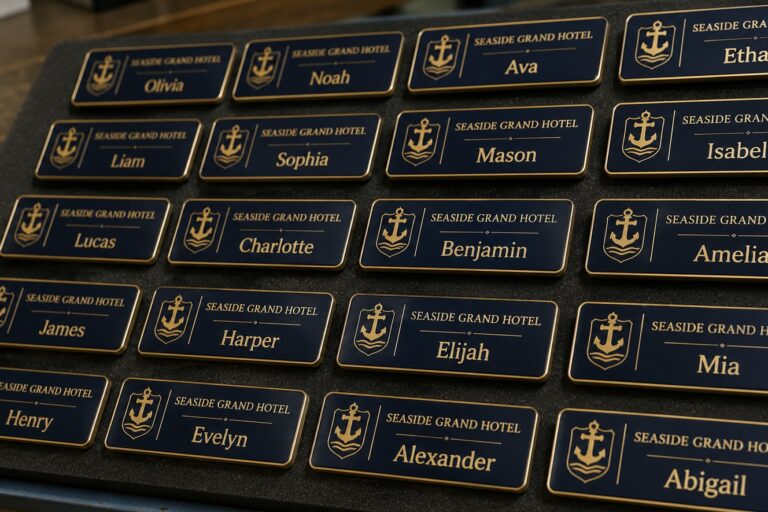
Enamel color-fill metal tags add a restaurant’s brand colors directly into a durable metal base, giving name tags for restaurants a polished, branded look that survives cleaning chemicals and daily handling better than a printed or engraved plastic tag. The chart compares how each material holds up on the factors that matter most in a food-service setting.

Why plastic falls short faster than expected
Plastic tags often look identical to metal on day one, which is exactly why the difference surprises buyers — the wear only shows up after weeks of grease exposure and pocket friction. If your team reorders name tags more than once a year, material quality, not design, is usually the real cause.
Choosing an attachment that survives an apron or chef coat
Magnetic backing has become the default for restaurants because it clips through fabric without punching a hole in a uniform, works on an apron, chef coat, or polo, and stays securely attached through a fast-moving shift without the snag risk a pin creates. Pin backing is the traditional option and works fine on sturdier fabric, but it does put small holes in uniforms over repeated use and poses a minor snag risk around food prep.
Clip attachments suit an apron pocket or a lanyard-style setup, and adhesive is really only appropriate for single-use or temporary event badges, not daily restaurant wear, since adhesive backing fails quickly under heat and grease. The chart shows how restaurant orders typically split across attachment types.

Ordering a batch that scales with staff turnover
Restaurants deal with more frequent staff turnover than most industries, so ordering strategy matters. The table below is a simple approach that keeps reorders fast without redesigning the tag every time someone new starts.
| Situation | Approach | Why it works |
|---|---|---|
| Steady staff, low turnover | Order individually named tags | Clean, permanent look per employee |
| High turnover roles | Order blank + reusable name insert | No reorder needed per new hire |
| Multi-location chain | Standardize material & logo, vary name | Consistent brand across locations |
A reusable insert system saves real money for restaurants with seasonal or high-turnover staff, since only the name element changes rather than the whole tag. For attachment types beyond magnetic backing, see our companion Name Tag Attachment Types: Magnet vs Pin vs Clip vs Adhesive, and browse durable materials across our magnetic name tags range.
Managing a name tag program through seasonal staff turnover
Restaurants and cafes hire seasonally more than most industries, which means a name tag program built around permanently engraved, individually named tags can become an expensive, constant reorder cycle. A reusable insert system — a durable metal or acrylic frame with a swappable printed or written name card — solves this directly, letting a manager relabel a badge for a new hire in minutes instead of waiting on a fresh order.
For roles with especially high turnover, like seasonal summer hires or holiday extra staff, consider a simple first-name-only badge rather than full name and title, which reduces the personalization variables and makes a blank stock of pre-made badges genuinely reusable across many different employees without any custom element beyond a dry-erase or insert name.
Keep a small buffer stock of blank badges and backings on hand at all times, separate from the named order, so a manager can outfit a new hire on their first shift rather than making them wait a week for a name tag to arrive — a detail that matters more for first impressions than it might seem.
Match badge style to role, not just to the whole team
Front-of-house staff who interact with guests directly benefit most from a clear, professional badge; back-of-house kitchen staff under a hairnet and apron may prioritize a simple, grease-resistant clip tag over a polished front-of-house design. It’s fine to run two badge styles within one restaurant.
Keeping name tags looking sharp through a full shift
Beyond material choice, a few small design decisions affect how well a name tag holds up visually through a busy shift. Recessed or engraved lettering resists wear better than surface-printed text, which can rub off or fade from repeated contact with an apron strap or a wiped-down surface over weeks of use.
Rounded corners and a slightly smaller badge size reduce the chance of snagging on equipment, pockets, or another staff member’s uniform during a fast-moving shift, which matters in tight kitchen or counter spaces where staff move past each other constantly.
For multi-location restaurant or cafe groups, standardizing badge size, material, and font across every location keeps the brand consistent for guests moving between locations, and it also simplifies reordering since every location is working from the same spec rather than a slightly different one that’s crept in over time.
Order a few extra blanks with every reorder
Whenever you place a reorder, add a handful of extra blank badges beyond what’s strictly needed. A lost or damaged badge on a Friday night shift is a bad time to discover the stockroom is out.
Factor in how a name tag interacts with food-safety expectations, particularly in kitchens with strict hygiene protocols. A tag with exposed screws, sharp edges, or crevices that trap grease and debris can become a genuine sanitation concern in an inspected kitchen, so a smooth, sealed metal tag with a secure, snag-free backing is worth the small cost premium over a cheaper option with more exposed hardware. Restaurants operating under a health department inspection regime should treat name tag material as part of their broader hygiene standard, not a separate decision made purely on look and durability.
Frequently asked questions
What’s the most durable name tag material for a restaurant?
Brushed or enamel color-fill metal significantly outlasts plastic in a food-service environment, resisting the grease, steam, and frequent wiping that dulls plastic within weeks.
Why do restaurants prefer magnetic name tags?
Magnetic backing avoids putting holes in uniforms, works across aprons, chef coats, and polos, and stays securely attached through a fast-paced shift without the snag risk a pin can create.
Ordering name tags for your restaurant?
Tell us your staff count and turnover and we’ll spec durable name tags for restaurants that hold up on the floor.