How Strong Are Name Tag Magnets? A Fabric and Wearer Guide
The number-one question buyers ask is simple: will it hold? Magnetic name tags rely on the right magnet strength for the garment, and matching the two is what keeps a badge from sliding or falling. Too weak and it droops; too strong and it is hard to remove. This guide explains how strong name tag magnets need to be for different fabrics and wearers.
The good news: magnetic name tags use replaceable magnet counts, so you can dial in the hold for your team’s typical clothing.
Matching magnets to fabric
Lightweight blouses hold well with two magnets, while dress shirts and knits do better with three, and thick coats or lapels may need four. The guide below maps magnet count to garment type.
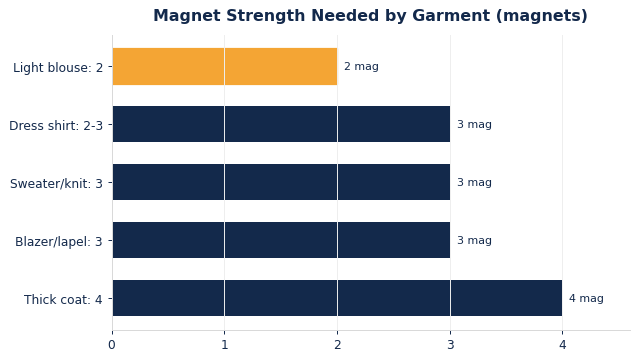
When a team wears a mix of fabrics, spec for the heaviest common garment — a slightly stronger magnet holds a light blouse fine, but a weak one fails on a blazer.
Who uses magnetic name tags
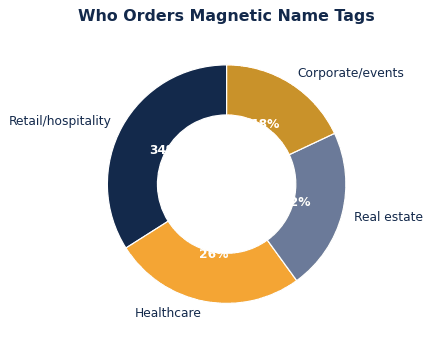
Retail and hospitality lead, followed by healthcare, real estate, and corporate events — anywhere teams want a professional badge without pinholes in nice clothing. The breakdown below shows common users.
Choosing the backing and finish
Standard magnetic backings suit most uniforms; heavy-duty versions handle thick coats. Pair the backing with a durable printed or engraved finish that survives daily handling, and keep the tag size proportional so it sits flat without sagging.
| Garment | Magnets | Note |
|---|---|---|
| Blouse | 2 | Light hold |
| Dress shirt/knit | 3 | Standard |
| Coat/lapel | 4 | Heavy-duty |
Outfitting a specific team like agents? See our companion guide, our Custom Name Tags for Real Estate Agents & Brokerages. Explore our magnetic name tags or get in touch.
How magnet count and type affect hold
Magnetic name tags hold through the pull between magnets on the badge and a backing plate on the inside of the garment, and the strength of that pull depends on both the number of magnets and their type. More magnets spread across a tag increase total holding force and keep a larger badge from tilting, while stronger rare-earth magnets provide more grip per magnet than standard ferrite. Matching the magnet configuration to the badge’s size and weight is what keeps it sitting straight and secure rather than sagging.
The garment between the magnets is the variable that changes everything. Thicker fabric increases the distance between the badge magnets and the backing plate, weakening the hold, which is why a configuration that grips a thin blouse can struggle on a thick blazer. Speccing the magnet count for the heaviest fabric your team commonly wears ensures the badge holds across the wardrobe rather than only on light shirts.
Weight, size, and materials of the badge
A name tag’s own construction affects how much holding force it needs. A heavier metal badge requires more magnet strength than a light plastic or printed tag, and a larger tag needs magnets spread to prevent tipping. Choosing the badge material with the wearer and setting in mind — a premium metal tag for a client-facing role, a lighter tag for all-day comfort — lets you balance appearance, comfort, and the magnet strength required to hold it.
Finish and durability round out the badge decision. A printed or engraved finish that survives daily handling keeps the tag looking professional, and a size proportional to the design helps it sit flat against the garment rather than pulling away at the edges. Considering weight, size, and finish together produces a badge that both looks right and stays reliably in place.
Safety, comfort, and everyday practicality
The reason magnetic name tags are so popular is practical: they avoid the pinholes that pins leave in uniforms, blazers, and delicate fabrics, which protects nicer clothing and pleases staff. A magnetic backing also sits flat and comfortable, without the poke of a pin, and is quick to attach and remove at the start and end of a shift. Those everyday conveniences are why hospitality, healthcare, retail, and corporate teams favor them.
One practical caution deserves attention: strong magnets can interfere with pacemakers and some medical devices, so offering a pin or clip alternative for anyone who needs it is a simple, considerate accommodation. Communicating that option keeps the program inclusive. With the right magnet strength for the garment and a sensible alternative on hand, magnetic name tags deliver a professional, pinhole-free badge that staff are happy to wear.
Choosing backings for mixed teams and uniforms
Teams rarely all wear the same fabric, so the smart approach to magnetic name tags is to spec for the range your staff actually wears. If some employees wear light blouses and others wear blazers or thick knits, choosing a magnet strength suited to the heaviest common garment ensures the badge holds for everyone, since an over-strong magnet still holds a thin shirt fine. Standardizing one reliable configuration across the team keeps ordering simple and avoids badges that hold for some staff but sag for others.
Offering a small menu of backing options handles the exceptions gracefully. A heavy-duty magnetic option for staff in thick coats, plus a pin or clip alternative for anyone who prefers one or needs a medical-device accommodation, covers the whole team without compromising the pinhole-free benefit for most wearers. A flexible backing plan keeps everyone comfortable and every badge secure.
Consistency in the badge design ties it together. Even with different backings, keeping the same tag size, finish, and layout across the team preserves a unified, professional look. Deciding the backing strategy alongside the design ensures the badges both hold reliably and present the brand consistently, whatever the uniform.
Common questions about magnetic name tags
How many magnets does a name tag need?
Lightweight blouses hold well with two magnets, dress shirts and knits do better with three, and thick coats or lapels may need four. Spec for the heaviest fabric your team commonly wears, since a stronger magnet holds a light garment fine but a weak one fails on a blazer.
Why do magnetic name tags fall or sag?
Usually because the magnet strength is too low for the garment thickness or the badge weight. Thicker fabric increases the gap between magnet and backing plate, weakening the hold, so add magnets or choose stronger ones for heavy garments and larger tags.
Are magnetic name tags safe for everyone?
They are safe for most wearers, but strong magnets can interfere with pacemakers and some medical devices, so offer a pin or clip alternative for anyone who needs one. This simple accommodation keeps the program inclusive.
Do magnetic tags damage clothing?
No — that is their main advantage. A magnetic backing holds without the pinholes that pins leave in uniforms and blazers, which protects nicer clothing and is why staff prefer them. Choose the right magnet strength so the tag holds without needing an over-strong grip.
Speccing name tags that actually hold?
We’ll match magnet strength to your team’s uniforms and finish.
Get a Quote